综合练习
数据分析实战演练
应用篇“表达我自己比被人喜欢更重要。” 加油
尽可能的在tidyverse的框架下完成
library(tidyverse)day01
旋转数据框,要求
d <- tibble::tribble(
    ~name, ~chinese, ~math, ~physics, ~english, ~music, ~sport,
  "Alice",      88L,   63L,      98L,      89L,    85L,    72L,
    "Bob",      85L,   75L,      85L,      82L,    73L,    83L,
  "Carlo",      95L,   98L,      75L,      75L,    68L,    84L
  )
d
变成
day02
排序,要求按照score从大往小排,但希望all是最下面一行。
d <-
  tibble::tribble(
  ~name, ~score,
   "a1",     2,
   "a2",     5,
   "a3",     3,
   "a4",     7,
   "a5",     6,
  "all",    23
  )
变成
day03
统计每位同学,成绩高于各科均值的个数,
d <- tibble::tribble(
  ~name, ~chinese, ~engish, ~physics, ~sport, ~music,
  "Aice", 85, 56, 56, 54, 78,
  "Bob", 75, 78, 77, 56, 69,
  "Cake", 69, 41, 88, 89, 59,
  "Dave", 90, 66, 74, 82, 60,
  "Eve", 68, 85, 75, 69, 21,
  "Fod", 77, 74, 62, 74, 88,
  "Gimme", 56, 88, 75, 69, 34
)
d
变成
day04
data <- tribble(
  ~id, ~corr, ~period,
  1, 0, "a",
  1, 0, "b",
  2, 0, "a",
  2, 1, "b",
  3, 1, "a",
  3, 0, "b",
  4, 1, "a",
  4, 1, "b"
)
data
先按id分组,
- 如果corr中都是0 就"none"
- 如果corr中都是1 就"both"
- 如果corr中只有一个1,就输出1对应period
day05
图中柱子上的字体没有显示完整,请改进。
d <- tibble::tribble(
     ~name, ~value,
   "Alice",    2.12,
     "Bob",   68.45,
  "Carlie",   15.84,
    "Dave",    7.38,
     "Eve",    0.56
  )


d %>%
  ggplot(aes(x = value, y = fct_reorder(name, value)) ) +
  geom_col(width = 0.6, fill = "gray60") +
  geom_text(aes(label = value, hjust =1))  +
  theme_classic() +
  scale_x_continuous(expand = c(0, 0)) +
  labs(x = NULL, y = NULL)
day06
我看到新闻有一张图很漂亮,您能重复出来?
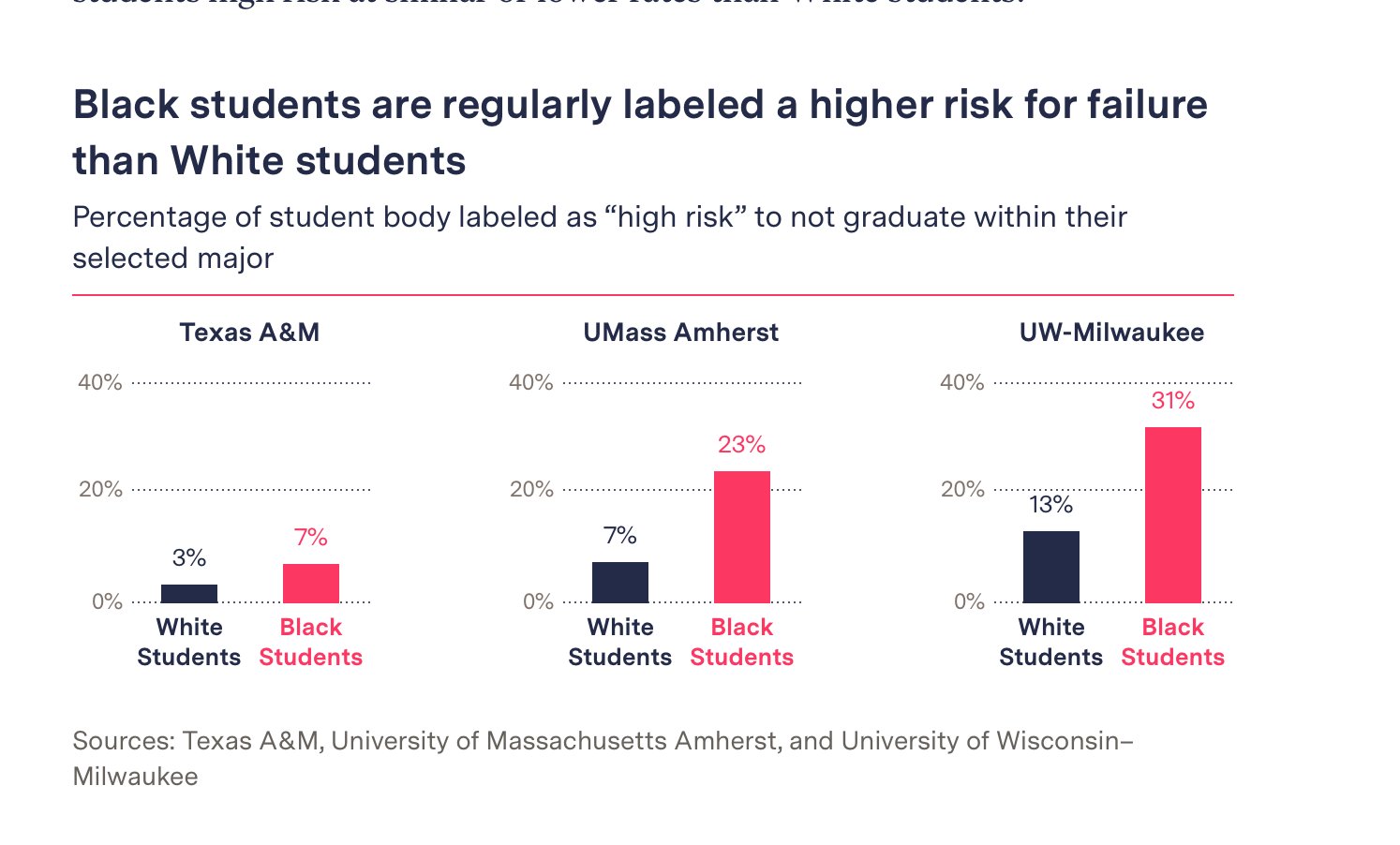
数据在下面
d <- tibble::tribble(
            ~area,           ~group, ~value,
      "Texas A&M", "white Students",   0.03,
      "Texas A&M", "Black Students",   0.07,
  "Umass Amherst", "white Students",   0.07,
  "Umass Amherst", "Black Students",   0.23,
   "UW-Milwaukee", "white Students",   0.13,
   "UW-Milwaukee", "Black Students",   0.31
  )
d
提示,可以把图片拉到https://color.adobe.com/zh/create/image-gradient 获取颜色值,比如
colorspace::swatchplot(c("#F42F5D","#252A4A"))day07
告诉你一个你可能不知道的事情,summarise()一定要输出数据框吗?
iris %>%
  nest_by(Species) %>%
  rowwise() %>%
  summarise(
    write_csv(data, glue("{Species}.cvs"))
    )
day08
运行以下两个代码,结果和你期望的一样?为什么?
mtcars %>%
  group_by(cyl) %>%
  summarise(
    broom::tidy(lm(mpg ~ wt, data = .))
  )

mtcars %>%
  group_by(cyl) %>%
  summarise(
    broom::tidy(lm(mpg ~ wt))
  )
day09
缺失值替换,数值型的缺失值用0替换,字符串型的用""
df <- tibble(
  x = c(NA, 1, 2),
  y = c("a", NA, NA),
)
day10
六年级的年级主任让学生提交自己所在的班级号,看到结果后,他很苦恼,你能帮忙他规整下?
d <- tibble::tribble(
               ~id,
               "2",
              "03",
       "小学2015级2班",
       "小学2015级3班",
            "0601",
            "0602",
          "201502",
          "201604",
            "6.10",
            "6.11",
             "6.5",
             "6.8",
              "06"
       )
d
day11
每行以x为均值生成一个随机数, 以下哪个是正确的?
# A
tibble(x = 1:5) %>%
  mutate(normal_mean = rnorm(1, mean = x))

# B
tibble(x = 1:5) %>%
  mutate(normal_mean = rnorm(n(), mean = x))

# C
tibble(x = 1:5) %>%
  mutate(normal_mean = map_dbl(x, ~rnorm(1, mean = .)))

# D
tibble(x = 1:5) %>%
  mutate(normal_mean = map_dbl(x, ~rnorm(1), mean = .))

# E
tibble(x = 1:5) %>%
  rowwise() %>%
  mutate(normal_mean = rnorm(1, mean = x))
day12
purrr::map()的辅助参数放里面和放外面,有什么区别?
x <- rep(0, 3)
plus <- function(x, y) x + y

map_dbl(x, plus, runif(1))
map_dbl(x, ~plus(.x, runif(1)) )
day13
计算每天水分和食物的所占比例, 比如第一天water和food都是10.0,那么各自比例都是50%.
d <- tibble::tribble(
  ~water, ~food,
  10.0,   10.0,
  12.1,   10.3,
  13.5,   19.1,
  17.4,   16.0,
  25.8,   15.6,
  27.4,   19.8
)
d
day14
以下代码哪些会给出相同的图形?
tb <- tibble(
     x = rep(c(1,2,3), 2),
     y = c(1:6),
    group = c(rep("group1", 3),  rep("group2", 3) )

)
ggplot(tb, aes(x,y)) + geom_line()ggplot(tb, aes(x,y,group=group)) + geom_line()ggplot(tb, aes(x,y,fill=group)) + geom_line()ggplot(tb, aes(x,y,color=group)) + geom_line()
day15
重复这张图
数据在下面
library(tidyverse)
raw_df <- read_rds(here::here("demo_data", "rude_behavior_in_airplane.rds"))
raw_df
day16
library(tidyverse)

genes <- paste0("gene", 1:5) %>% set_names(.)
genes这里有一个列表,其元素list1, list2, list3是3个长度不等的向量
big_list <- list(
  list1 = paste0("gene", c(1:2, 6:7)),
  list2 = paste0("gene", c(6:7)),
  list3 = paste0("gene", c(1, 4:7))
  )
big_list
需求:想看下 [R表达式] 是否出现在 list1, list2, list3中,并统计成下表
day17
统计每支球队,比赛次数以及赢得比赛的分数之和
games <- tibble::tribble(
  ~team, ~outcome, ~points,
    "A",    "Win",      3,
    "A",   "Lose",      1,
    "A",    "Win",      1,
    "A",    "Win",      2,
    "B",    "Win",      1,
    "B",    "Win",      1,
    "B",   "Lose",      3,
    "B",   "Lose",      1
  )
games
day18
只让gentoo这个分面,背景色高亮
library(tidyverse)
library(palmerpenguins)

penguins %>%
  ggplot(aes(x = bill_length_mm, y = bill_depth_mm)) +
  geom_point() +
  facet_wrap(vars(species), ncol = 3)
day19
用下面的数据,画出柱中柱效果
tb <- tibble::tribble(
      ~group,   ~product, ~sale,
    "Target", "Balender",   80,
    "Target",      "Fan",   90,
    "Target",   "Cooler",   70,
    "Target",       "AC",   95,
  "Achieved", "Balender",   50,
  "Achieved",      "Fan",   55,
  "Achieved",   "Cooler",   60,
  "Achieved",       "AC",   45
  )

tb
day20
修改列名,在m或者f的后面加下划线
tb <- tibble::tribble(
  ~id, ~new_ep_m014, ~newrel_f1524, ~new_sp_f65, ~new_ep_m3544,
   1L,           3L,            2L,          4L,            1L,
   2L,           4L,            4L,          5L,            2L,
   3L,           5L,            5L,          6L,            6L,
   4L,           6L,            6L,          7L,            8L
  )
tb
day21
library(tidyverse)

df <- tibble(
  x = 1:10,
  y = sample(c("a", "b"), size = 10, replace = TRUE)
)
df
说出这里三行代码分别的含义
df %>%
  summarise(
    y1 = sum(x),
    y2 = sum(y == "a"),
    y3 = sum(x[y == "a"])
  )
day22
看中这个张图<https://www.healthsystemtracker.org/brief/covid-19-leading-cause-of-death-ranking/>,数据也是可以下载的
day23
问题,这两张图一样吗?
library(dplyr)
library(ggplot2)

df <- data.frame(
  x = rnorm(n = 2 * 500),
  group = rep(c("1", "2"), each = 500)
)

ggplot(df) +
  geom_line(
    mapping = aes(x = x, group = group),
    stat = "density",
    alpha = 0.5
  )

ggplot(df) +
  stat_density(
    mapping = aes(x = x, group = group),
    geom = "line",
    alpha = 0.5
  )
day24
1 == "1"结果会是什么?
- TRUE
- FALSE
- Error
- NULL
day25
如何让连续在一起的类别,分为一组。比如这里的x变量,分为4组
df <- tibble::tribble(
  ~x,   ~y,
  "a",   2,
  "a",   3,
  "b",   4,
  "b",   5,
  "a",   1,
  "a",   3,
  "a",   2,
  "b",   3
  )

df
day26
都是size = 15 为什么一个大一个小呢?
day27
ww <- c("ab1", "vf2", "aaba2", "ddb76", "d8p")
ww- 找出数值
- 找出b后紧跟的数值
- 找出b后面出现的数值
# remove the objects
# rm(list=ls())
rm(d, data, df, my_function, text_subtitle, genes, big_list, games)pacman::p_unload(pacman::p_loaded(), character.only = TRUE)